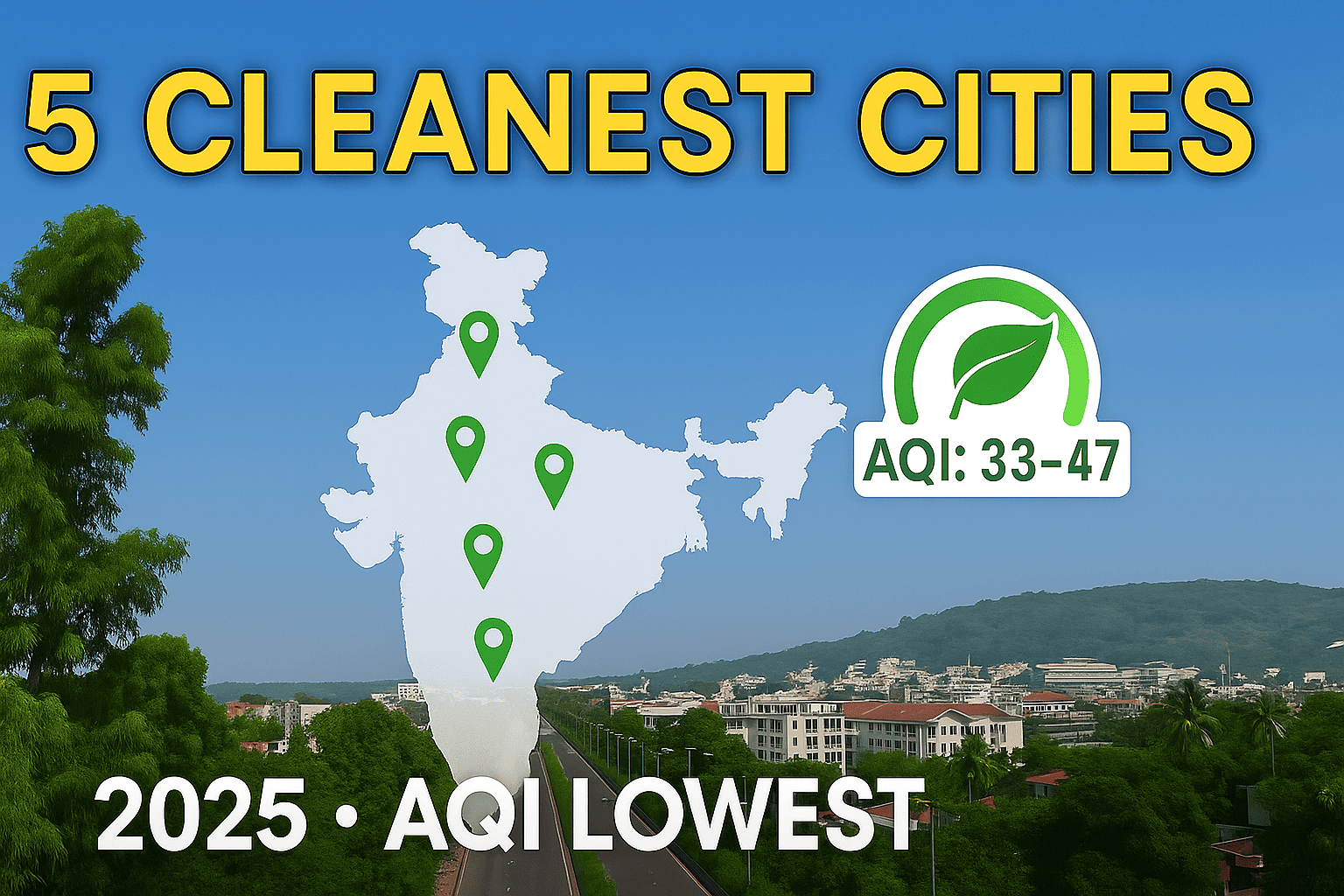
Discover the 5 cleanest air cities in India as of 2025, including Tirunelveli and Madikeri. See how they improved air quality under NCAP.
In a country where pollution continues to be a major public health concern, some cities are setting a new benchmark. According to fresh data released by the Central Pollution Control Board (CPCB), these five Indian cities started 2025 with the cleanest air in the country — a rare achievement in urban India.
Let’s take a look at the top 5 cities breathing the purest air this year.
Top 5 Indian Cities With the Cleanest Air (As of January 2025)
1. Tirunelveli, Tamil Nadu
AQI: 33 | Primary Pollutant: PM10
Currently ranked as the cleanest city in India, Tirunelveli boasts a calm environment, minimal industrial activity, and rich greenery. These factors have helped the city maintain excellent air quality.

2. Naharlagun, Arunachal Pradesh
AQI: 43 | Primary Pollutant: PM10
Located in the scenic hills of Northeast India, Naharlagun benefits from low vehicular pollution and natural air circulation due to its geography.

3. Madikeri, Karnataka
AQI: 44 | Primary Pollutant: PM2.5
Nestled in the Coorg region, this hill town is known for its lush landscapes and low population density. Minimal traffic and ample green cover contribute to its clean air.

4. Vijayapura, Karnataka
AQI: 47 | Primary Pollutant: PM10
Thanks to proactive local governance focusing on street cleaning and dust control, Vijayapura has emerged as a clean-air success story.
5. Thanjavur, Tamil Nadu
AQI: 47 | Primary Pollutant: PM10
This historic and cultural city is now gaining attention for something more modern — its air quality. Strategic planning and environmental efforts have paid off.

What’s Driving the Drop in Pollution?
According to the 2025 report, 103 out of 130 non-attainment cities in India saw a notable reduction in PM10 levels. Much of this improvement is linked to the National Clean Air Programme (NCAP) and related initiatives.
Even metro cities like Mumbai, Kolkata, Prayagraj, and Varanasi have shown major improvements in their air quality index (AQI).
Prayagraj & Varanasi: A Clean-Air Comeback
As per CPCB, Prayagraj and Varanasi scored 100 out of 100 in AQI performance for 2024–25.
- Prayagraj recorded 360 days with AQI below 200.
- Since 2019–20, Prayagraj’s PM10 levels dropped by 55% — a remarkable achievement driven by street cleaning, waste management, and green cover expansion.
Delhi’s Unexpected Turnaround
Surprising many, Delhi recorded its cleanest July in 10 years in 2025 with an average AQI of 79 — the lowest since 2015.
Experts credit this improvement to consistent rainfall, fewer vehicles on the road, and strong pollution control efforts by the authorities.
Why Are These Cities Succeeding?
🌍 Geographic Advantage:
Cities like Tirunelveli, Madikeri, and Thanjavur are situated near hills or coastal regions, allowing for better air circulation and minimal industrial pollution.
🏛️ Administrative Action:
- Regular street cleaning
- Dust suppression (e.g., water spraying)
- Waste disposal upgrades
- Tree plantation drives
👥 Citizen Involvement:
- Preference for public transport
- Avoiding open burning of plastic or waste
- Participation in local cleanliness campaigns
What’s Next for India’s Clean-Air Goals?
The Indian government has set a goal to reduce PM10 and PM2.5 levels by 30% in all non-attainment cities by 2026. This involves collaboration across central, state, and local bodies.
If more cities follow in the footsteps of these five, India could soon join the list of countries with the cleanest urban air.
Conclusion
From Tirunelveli to Thanjavur, these cities have proven that with the right mix of policies, committed governance, and active citizen participation, cleaner air is not just a dream — it’s an achievable goal.
Their success offers hope and a powerful message: even in a country as large and complex as India, meaningful change is possible when everyone does their part. These cities have not only improved their air quality but have also improved the quality of life for their residents — leading to healthier communities, reduced disease burden, and a better future for the next generation.
As climate concerns grow globally and environmental degradation becomes a ticking time bomb, such stories of local transformation serve as blueprints for sustainable urban development.
The road ahead is long, but not impossible. If more Indian cities follow the path these five have charted — by investing in green spaces, managing waste responsibly, controlling dust, and making air quality a public priority — India can move closer to becoming one of the world’s cleanest and healthiest nations.
This is not just a win for these cities — it’s a call to action for the entire country.

 By
By