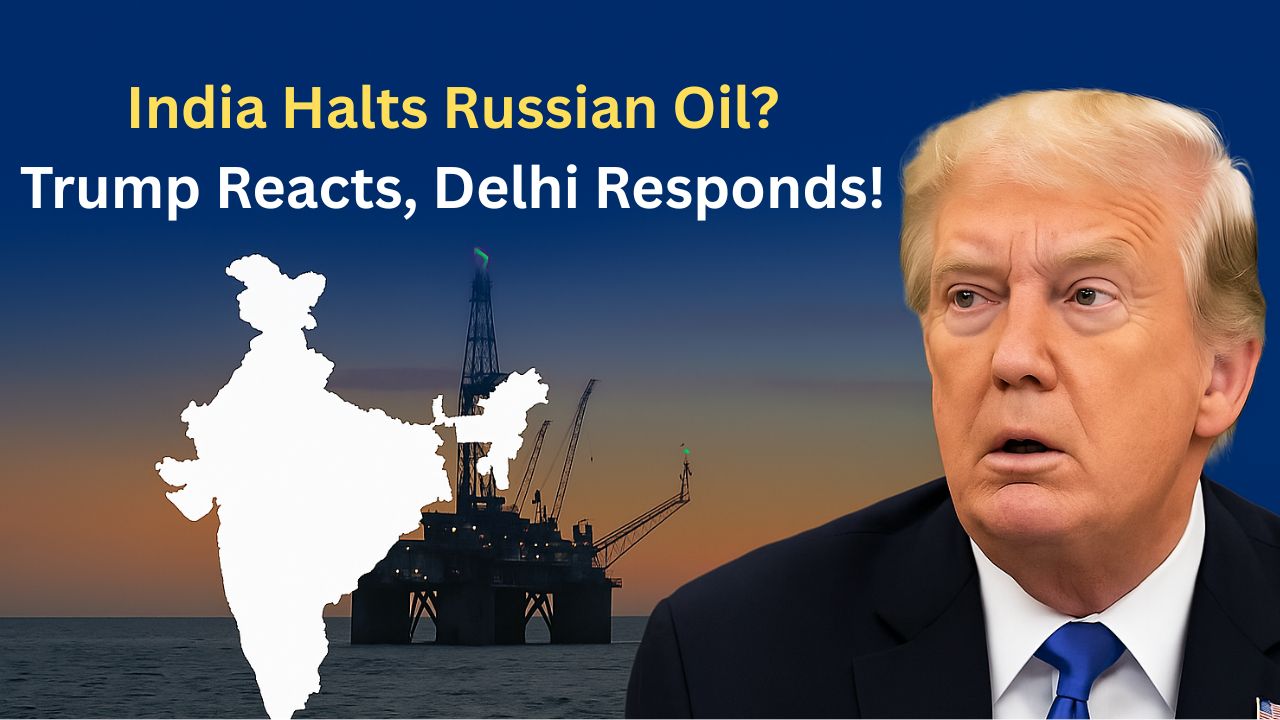
India’s Russian oil trade in 2025 is under the spotlight as Donald Trump hails a possible halt a “good step.” India denies stopping imports, emphasizing sovereign policy decisions amid U.S. pressure.
New Delhi/Washington, August 2, 2025 –
Former U.S. President Donald Trump stirred global headlines by commenting on India’s Russian oil trade 2025, calling reports of a possible halt in imports a “good step.” While Trump admitted he wasn’t sure about the accuracy of the claims, his remarks added fuel to the ongoing debate about India’s energy ties with Russia. In response, India made it clear there has been no official directive to stop buying Russian crude, and its energy choices remain rooted in national interest.
Trump, speaking on stage, said, “I heard that India is not buying oil from Russia anymore… I don’t know if that’s right or not, but if true, it’s a good step.” His statement has sparked a fresh wave of speculation amid already tense global energy dynamics.
🇮🇳 India Clarifies: No Policy Shift in Russian Oil Trade 2025
Officials from India’s Ministry of External Affairs (MEA) promptly addressed the speculation. Senior spokesperson Randhir Jaiswal emphasized that there is currently no government order instructing Indian oil companies to halt Russian oil trade. “Our energy decisions are based on economic considerations and our sovereign right to decide,” he said.
The MEA reiterated that India’s oil import strategy remains independent, guided by market dynamics, energy security, and affordability, not external political pressure.
⚙️ What’s Actually Happening: Temporary Pause, Not a Ban
While the Indian government has made no policy shift, public sector oil refiners such as Indian Oil Corporation (IOC), Bharat Petroleum (BPCL), Hindustan Petroleum (HPCL), and Mangalore Refinery (MRPL) have reportedly paused spot market purchases of Russian oil in recent weeks.
Analysts suggest this pause could be due to narrowing discounts on Russian crude, which once made it attractive compared to other suppliers. In addition, geopolitical pressure from Western nations may have influenced short-term business decisions, though no formal directive has been issued.
Importantly, private refiners like Reliance Industries and Nayara Energy continue importing Russian oil under long-term contracts, indicating no complete withdrawal from Russian energy.
U.S. Tightens Trade Pressure on India for Russian oil trade
Trump’s comments come amid rising trade tensions. On July 30, the U.S. imposed a 25% tariff on several Indian imports, accompanied by penalties targeting Indian dealings with Russia—including purchases of crude oil and defence equipment.
The move reflects ongoing dissatisfaction in Washington over New Delhi’s balancing act between strategic ties with the West and continued engagement with Moscow.
💬 U.S. Officials: India’s Oil Imports a “Point of Irritation”
U.S. Secretary of State Marco Rubio also weighed in, calling India’s continued oil imports from Russia a “point of irritation” in bilateral relations. While acknowledging India as a key partner, he noted that “perfect alignment on all issues isn’t always possible.”
Despite the friction, Indian officials maintain that relations with the U.S. remain crucial. “We value our ties with the United States, but our energy needs and national interest will always come first,” a senior diplomat said.
🌍 Global Oil Market May Feel the Impact
India has become one of the largest buyers of Russian seaborne crude, accounting for roughly 35% of Russia’s oil exports—approximately 2 million barrels per day. If India significantly cuts imports, global oil supply could tighten, pushing Brent crude prices above $80 per barrel, experts warn.
With ongoing U.S. sanctions on Russian energy, several oil tankers destined for India have already re-routed to ports in Egypt and China, signalling shifts in global trade patterns.
🧭 What This Means for India and the World
India is walking a tightrope: maintaining strong global relationships while securing affordable energy to fuel its fast-growing economy. So far, the country has successfully balanced its partnerships, continuing long-term Russian deals while exploring diversification with suppliers like the U.S., UAE, and Saudi Arabia.
However, the escalating pressure from Washington may force further adjustments. Industry insiders expect more diplomatic backchannel talks in the coming weeks.
🔍 Summary at a Glance
| Topic | Details |
|---|---|
| Trump’s Statement | Applauds India for reported halt in Russian oil trade; unsure if it’s confirmed |
| India’s Official Position | No directive to stop imports; policy based on national interest |
| Refiners’ Action | Temporary pause in spot purchases by public sector firms |
| Private Sector Activity | Continued imports through long-term contracts |
| U.S. Trade Action | 25% tariffs on Indian goods; penalties linked to Russia ties |
| Geopolitical Impact | Oil price surge risk; rerouting of Russian crude vessels |
✍️ Final Thoughts
In summary, while former President Trump’s comments may have sparked fresh debate, there’s currently no confirmed halt in India Russian oil trade 2025. With public sector refiners adjusting short-term buying strategies and private companies continuing long-term deals, India remains committed to balancing global expectations with its own national interests. Any future developments will depend on a mix of market trends, diplomatic negotiations, and domestic energy priorities.
India’s stance remains firm: energy independence and national interest come first. While global players like the U.S. may push for shifts in strategy, New Delhi continues to resist foreign influence when it comes to essential resources.
The coming months will reveal how India manages this diplomatic balancing act—one that could reshape global oil markets and redefine future alliances.
 By
By