GPT-5 is OpenAI’s smart, powerful upgrade. Learn how GPT-5 boosts reasoning, coding, multimodal tasks, and safety—while shaping the future of AI.
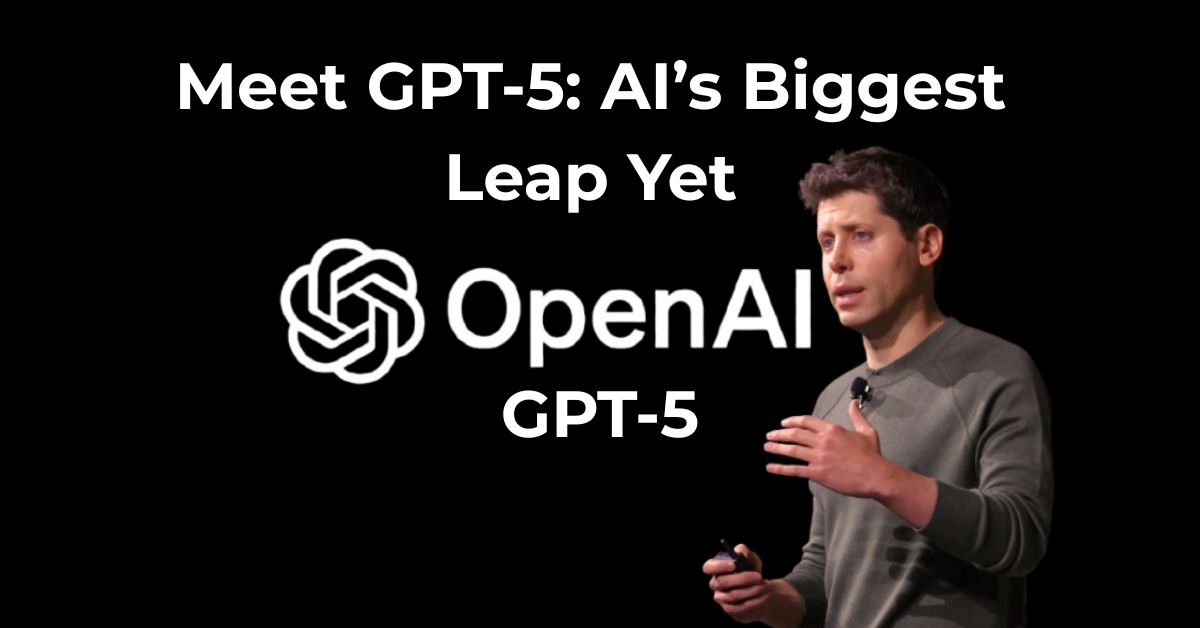
Artificial intelligence just got a major upgrade. Meet GPT-5, OpenAI’s powerful new language model that surpasses every previous version. Released officially on August 7, 2025, this upgrade brings leap-forward reasoning, precise coding skills, and advanced context awareness—ushering AI into new realms of usefulness. If GPT-4 was revolutionary, GPT-5 is transformational.
If AI has already transformed industries from marketing to medicine, GPT-5 could push that transformation into overdrive.
What Exactly Is GPT-5?
GPT-5 (Generative Pre-Trained Transformer 5) is OpenAI’s flagship AI system. Released in August 2025, it replaces older models like GPT-4o and o-series variants with a unified architecture that includes fast and “thinking” modes intelligently selected via a real-time router.
What makes GPT-5 stand out isn’t just that it’s bigger or trained on more data. The real magic lies in how it processes, stores, and recalls information. This model can handle tasks that require deep reasoning, creative thinking, and long conversations with impressive accuracy. Whether it’s solving a tricky logic puzzle, brainstorming a marketing slogan, or writing a short story, GPT-5 does it faster and more naturally than previous versions.
Key Features of GPT-5
Here’s why GPT-5 is attracting so much attention:
- Advanced Reasoning Skills – It is much better at following complex instructions, spotting patterns, and delivering logically consistent answers.
- Better Memory – It can remember more from earlier in a conversation, so you won’t have to keep repeating details.
- Multimodal Abilities – GPT-5 isn’t just about text. It can work with images, charts, and potentially other media types, depending on the tools it’s connected to.
- More Accurate Answers – With better training data and refined algorithms, its responses are more factual and on-point.
- Improved Safety – OpenAI has worked to make it less biased and less likely to produce harmful or misleading outputs.
How GPT-5 Differs from GPT-4
GPT-4 was already impressive, but GPT-5 has taken several noticeable steps forward:
- Bigger, More Diverse Training Data – This means it understands more cultural nuances, languages, and technical subjects.
- Stronger Long-Form Writing – It can maintain tone, clarity, and structure across lengthy articles, reports, or stories.
- Better Multilingual Skills – Its translations feel more natural and idiomatic, not stiff or awkward.
- Adaptive Responses – It can tweak its style, tone, and complexity based on your preferences in real-time.
Where GPT-5 Could Make the Biggest Impact
The potential uses for GPT span across industries:
- Education – Personalized tutoring, instant explanations, and learning materials in multiple languages.
- Business & Marketing – Generating blog posts, ad copy, product descriptions, and social media campaigns.
- Healthcare – Summarizing patient records, generating documentation, and helping medical staff access quick reference material.
- Creative Arts – Assisting with screenwriting, novel drafting, lyric writing, and concept art.
- Software Development – Writing code, debugging, and even building functional prototypes from a simple description.
Concerns and Ethical Questions
With great power comes great responsibility — and GPT-5 is no exception. As exciting as it is, it also brings important challenges:
- Job Displacement – Certain roles, especially repetitive content creation or data processing jobs, could be automated.
- Misinformation – If used carelessly, it could produce convincing but false information.
- Bias – While improved, the model can still reflect biases from its training data.
- Privacy Risks – The handling of sensitive or personal information must remain a top priority.
OpenAI and other AI leaders are putting safeguards in place, including stronger safety filters, clearer guidelines, and more transparency about how AI decisions are made.
The Road Ahead
The release of GPT-5 is more than just a tech upgrade — it’s another step toward AI that can think, create, and collaborate almost like a human partner. While we’re still far from true human-level intelligence, the gap between human and machine-generated content is shrinking fast.
In the near future, we could see GPT woven into:
- Virtual assistants that truly understand context
- Education platforms that adapt to each student’s learning style
- Creative tools that co-write, co-design, and co-produce alongside humans
- Business systems that handle complex workflows with minimal oversight
Speaking on the popular All-In Podcast, Nvidia CEO Jensen Huang made headlines worldwide with a striking vision: artificial intelligence will generate more millionaires in the next five years than the internet did in its first two decades. You can read a full breakdown of his statement and its implications in our detailed feature on AI Millionaires & Jensen Huang’s Vision.
That said, experts stress the importance of balanced adoption. AI should be rolled out thoughtfully, with regulations, ethical use policies, and public education about its capabilities and limits.
Final Thoughts
GPT-5 isn’t just an upgrade — it’s a leap forward in how we communicate with technology. Its sharper reasoning, improved memory, and creative abilities could redefine productivity and open doors to new forms of human-computer collaboration. But like any powerful tool, its value depends on how we choose to use it.
Handled responsibly, it could be one of the most beneficial technologies of our time. Misused, it could spread misinformation, deepen biases, or erode trust in online content. The choice — and the responsibility — is ours.
One thing is certain: GPT-5 is not the finish line. It’s the start of an even more transformative era in AI, where our digital tools don’t just serve us, but work alongside us as partners.

 By
By