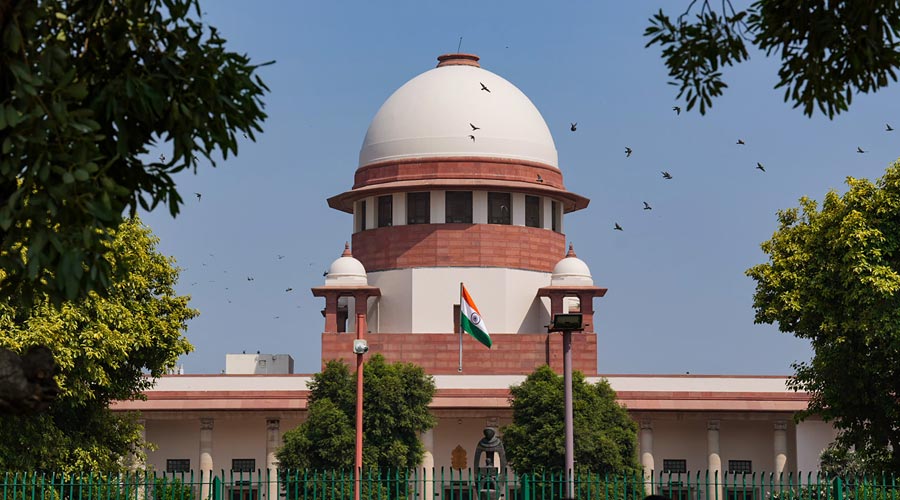
The Supreme Court has reserved its decision on petitions challenging its August 11 order to relocate all stray dogs from Delhi-NCR to shelters. The case sparks debate over public safety, humane treatment, and legal compliance.
The Supreme Court stray dogs order has triggered a nationwide debate, balancing public safety concerns with animal welfare principles. On August 14, 2025, the apex court reserved its verdict on petitions challenging its August 11 directive that all stray dogs in Delhi-NCR be permanently relocated to shelters within eight weeks.
While the move aims to address the rising number of dog bite incidents and rabies cases—especially involving children—animal rights advocates, NGOs, and legal experts argue that the directive bypasses existing Animal Birth Control (ABC) Rules 2023. With both sides presenting strong arguments, the verdict will likely set a precedent for how India manages its stray animal population in the years ahead.
What Happened on August 11
A two-judge bench of Justices JB Pardiwala and R. Mahadevan issued a suo motu order after alarming media reports on dog-bite incidents. The order required municipal authorities in Delhi, Noida, Gurugram, and Ghaziabad to:
- Round up all stray dogs within eight weeks.
- Relocate them permanently to shelters.
- Sterilize and vaccinate them before relocation.
- Penalize anyone obstructing the process.
The bench emphasized that public safety, particularly children’s welfare, must take priority, noting that sterilization alone does not prevent rabies or future bites.
Clash of Laws and Opinions
Legal Confusion
Chief Justice B.R. Gavai reassigned the matter to a three-judge bench—Justices Vikram Nath, Sandeep Mehta, and N.V. Anjaria—citing conflicts between the August 11 order and the ABC Rules 2023, which prioritize sterilization, vaccination, and controlled release rather than permanent sheltering.
Petitioners’ Arguments
Animal rights NGOs, including Project Kindness, argued that:
- Existing shelters are already over capacity.
- Overcrowding could harm the dogs’ health and cause aggression.
- The ABC protocols were being overlooked.
Senior Advocate Kapil Sibal warned that the order could lead to stress, disease, and cruelty if not implemented carefully.
Supreme Court’s View & Government Stand
Court’s Observations
The court criticized municipal bodies, particularly the MCD, for failing to implement existing welfare rules. It highlighted the conflict between preventing human suffering and upholding humane treatment for animals.
Government’s Position
Solicitor General Tushar Mehta argued that sterilization alone cannot curb rabies or ensure safety, citing 3.7 million annual dog-bite cases in India.
Animal Welfare Concerns
Expert Reactions
- Maneka Gandhi called the order “unworkable,” warning of ecological consequences similar to Paris’s rat infestations after dog culling in the 1880s.
- NGOs stressed the need for scientific, humane solutions instead of mass removals.
Shelter Capacity Issues
Centres like the Dulari Animal Welfare Centre already manage hundreds of dogs each month, raising concerns about resource shortages and care quality if thousands more arrive suddenly.
Nationwide Reactions
- Animal rights groups in Mumbai, including PFA-Mumbai and Dog Mantra, have planned protests demanding ABC compliance over relocation.
- On social media, a viral video of a dog attack reignited support for the court’s safety-first stance.
What’s Next?
The Supreme Court will decide whether to uphold or modify its August 11 order. If upheld, authorities must quickly expand shelters and staffing. If modified, the ABC Rules may be reinforced, focusing on sterilization and vaccination without mass relocation.
Read more : Vote theft claim by Rahul Gandhi (LOP)
Why This Case Matters
Public Safety vs. Animal Rights
This is a test of how India balances child safety with humane stray dog management.
Scientific Solutions Over Emotional Responses
Experts advocate sterilization and community management rather than large-scale sheltering.
Policy Implementation Gaps
The case highlights repeated failures of local bodies to enforce animal welfare laws effectively.
Conclusion
The Supreme Court stray dogs order has ignited one of the most complex legal and ethical debates in recent years. With public safety, animal rights, and legal compliance all at stake, the court’s forthcoming verdict will shape the future of stray animal management in India. Whether it opts for mass relocation, stricter ABC enforcement, or a hybrid model, the decision will influence policy nationwide for years to come.
 By
By