Introduction: Understanding the H1B Visa in 2025
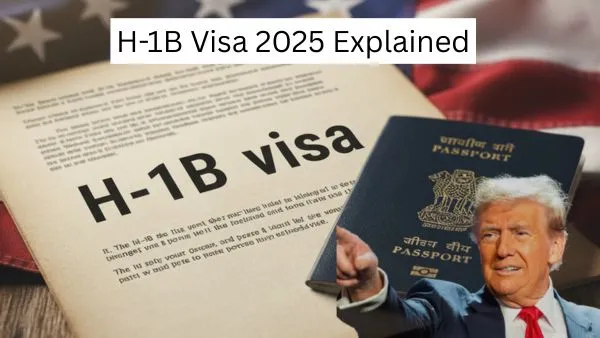
If you’ve ever dreamed of working in the United States, you’ve probably heard of the H-1B visa. But what is H1B visa exactly, and why does it matter so much in 2025? This visa program allows U.S. employers to hire highly skilled foreign professionals in specialized fields such as IT, engineering, finance, healthcare, and research. For many, it’s the first step toward building a career in the U.S. and even a pathway to permanent residency.
The H-1B has always been one of the most competitive visa programs, but recent changes in 2025 have made it even more important to understand. New fee structures, updated eligibility guidelines, and ongoing demand from top tech firms like Amazon, Google, and Microsoft keep the H-1B program in the spotlight. If you are wondering what is H1B visa in USA and how it can affect your career, this guide will walk you through everything: from eligibility and process to benefits, drawbacks, and alternatives.
What Is H1B Visa & Who Is Eligible?
At its core, the H-1B visa is a non-immigrant work visa that lets U.S. companies temporarily employ foreign professionals in specialty occupations. These jobs typically require advanced knowledge, a bachelor’s degree (or higher), and skills that are not easily available within the American workforce.
To break it down simply:
- Specialty Occupations: Jobs in IT, data science, engineering, healthcare, finance, teaching, and biotech.
- Employer Sponsorship: You cannot apply for an H-1B on your own. A U.S. employer must petition on your behalf.
- Educational Requirement: A minimum of a bachelor’s degree (or equivalent). Sometimes, extensive work experience can substitute for formal education.
- Temporary Stay: Initially valid for 3 years, extendable to 6 years. Some H-1B holders later transition to green cards.
The H-1B visa is significant not only for individuals but also for the U.S. economy. It allows American companies to tap into global talent while providing foreign professionals with career growth in one of the world’s most advanced economies.
H-1B Visa in the USA: Process, Fees, and 2025 Updates
Now let’s dive into the specifics of what is H1B visa in USA and how the process works. The U.S. application procedure is highly structured and includes multiple steps:
1. Employer Registration & Lottery
Each year, the U.S. Citizenship and Immigration Services (USCIS) opens a registration window. Employers submit petitions on behalf of candidates. Because demand usually exceeds supply, a lottery system is used to select applications. The annual cap is 85,000 visas (65,000 regular + 20,000 for advanced degree holders).
2. Filing & Petition
Once selected, the employer files Form I-129 with USCIS. Supporting documents include proof of the job role, applicant’s degree, and labor condition application approval.
3. Fees in 2025
One of the biggest updates in 2025 is the new petition fee structure. Employers now pay nearly $100,000 per new H-1B petition, a move designed to discourage mass filings by outsourcing firms. Smaller employers and startups are hit hard by these increased costs, making sponsorship a serious investment.
4. Approval & Visa Stamping
If approved, applicants schedule an interview at a U.S. consulate in their home country. Once the visa is stamped, they can travel and begin working in the U.S.
Understanding H1B visa USA requirements is essential for success. Applicants must ensure their degrees are valid, the sponsoring employer meets all labor standards, and deadlines are carefully followed.
Benefits, Challenges, and Key Statistics
Like every program, the H-1B visa comes with pros and cons:
Benefits
- Career Growth: Work in top U.S. companies like Amazon, Meta, and Tesla.
- Global Exposure: Opportunity to gain world-class skills and higher salaries.
- Green Card Pathway: Many H-1B holders transition to permanent residency.
Challenges
- Lottery Uncertainty: Selection depends on chance, not just merit.
- Employer Dependency: Changing jobs requires new sponsorship.
- High Costs: Employers face steep filing fees.
2025 Stats Snapshot
- Over 780,000 registrations filed in 2024.
- Amazon, Microsoft, and Infosys remain top sponsors.
- Indian professionals make up more than 70% of H-1B approvals.
Alternatives & Smart Tips
If you’re not selected in the lottery or your H-1B gets rejected, there are alternatives:
- O-1 Visa: For individuals with extraordinary ability in science, arts, or business.
- L-1 Visa: For intra-company transfers within multinational firms.
- F-1 OPT Extension: For students in STEM fields looking to stay longer.
Tips for Success:
- Apply early and keep documents ready.
- Work with employers who have a history of successful H-1B petitions.
- Explore backup visa options.
For the official process, always refer to the USCIS H-1B visa guidelines.
For more on India’s ongoing energy diplomacy, check out our piece on India’s Russian Oil Trade 2025.”
Frequently Asked Questions (FAQ)
Q1: What is H1B visa in USA and who can apply?
It is a temporary work visa that allows U.S. companies to hire foreign professionals in specialty occupations. Only U.S. employers can apply on behalf of candidates.
Q2: What is H1B visa meaning in USA for students?
For international students, it represents a pathway to continue working in the U.S. after graduation, especially if they studied STEM subjects.
Q3: What are the new fees for H-1B visa in 2025?
Employers now pay nearly $100,000 per new petition, making it a costly process.
Q4: Can H-1B visa holders apply for a green card?
Yes. Many H-1B holders transition to permanent residency through employer sponsorship.
Conclusion
The H-1B visa remains one of the most sought-after opportunities for skilled professionals worldwide. If you’ve ever wondered what is H1B visa and how it works in the USA, the answer lies in understanding eligibility, employer sponsorship, and the evolving 2025 requirements. With the right preparation and employer support, this visa can open doors to global careers and life-changing opportunities.

 By
By