The CJI Surya Kant cockroach controversy 2026 began with six words spoken inside India’s highest court — and ended with a satirical political party that gained 80,000 members in three days, two sitting Members of Parliament, and a protest march where activists wore cockroach antennae. What started as a routine Supreme Court hearing on May 15, 2026, became one of the most viral, most debated, and most darkly comic moments in Indian judicial history.
What Did CJI Surya Kant Actually Say?
While hearing a plea filed by advocate Sanjay Dubey seeking contempt proceedings over the alleged delay by the Delhi High Court in implementing the Supreme Court’s guidelines for the designation of senior advocates, CJI Surya Kant said: “There are youngsters like cockroaches, who don’t get any employment and don’t have any place in the profession. Some of them become media, some of them become social media, some of them become RTI activists, some of them become other activists, and they start attacking everyone.”
The bench criticised increasing attacks on the judiciary and made remarks about certain sections of media, social media and RTI activists. The court had said some unemployed youth who fail to establish themselves professionally spread everywhere like cockroaches, with some becoming media persons, RTI activists or social media commentators who attack everyone. The plea was dismissed.
Those words — spoken not by a politician or a TV anchor, but by the 53rd Chief Justice of India, the guardian of every citizen’s constitutional rights — landed like a grenade on social media within hours.
CJI Surya Kant Cockroach Controversy 2026: The Immediate Backlash
The reaction was instant and furious.
Sharp criticism came from opposition leaders, activists, lawyers and journalists over the remarks. RTI activist Anjali Bhardwaj said questioning authority was central to democracy and that citizens seeking accountability were strengthening, not attacking, institutions. Manoj Jha wrote an open letter expressing concern over the use of terms such as cockroaches and parasites, saying such language from a constitutional authority hurt democratic values.
Legal experts and constitutional scholars pointed out the chilling historical precedent of dehumanising language being used by authorities against their own citizens. The comparison to Nazi-era rhetoric — where Jewish people were routinely referred to as vermin and cockroaches before the Holocaust — was widely made across op-eds and social media posts within hours of the remarks surfacing.
For millions of young Indians already struggling with unemployment, NEET paper leaks, and a stalled economy, the Chief Justice’s words felt like salt poured into an open wound. These were not faceless bureaucrats or anonymous trolls being called cockroaches. These were the very citizens who had been using the RTI Act — a law the Supreme Court itself had upheld repeatedly — to hold institutions accountable.
The CJI’s Clarification — Too Little, Too Late?
Chief Justice of India Surya Kant issued a clarification on May 16, 2026 regarding his oral remarks. The clarification stated that his comments were directed solely at individuals entering professions such as law with fake or bogus degrees, not at the youth of the country. CJI Surya Kant clarified: “What I had specifically criticised were those who have entered professions like the Bar with the aid of fake and bogus degrees. Such persons have sneaked into media, social media, and other noble professions and hence they are like parasites.”
The CJI said he was saddened to see that a section of the media misrepresented his oral statement given during the hearing of a frivolous case. He said: “I am proud of the country’s present and future resources. Every youth of India inspires me.”
But by the time the clarification arrived, the CJI Surya Kant cockroach controversy 2026 had already taken on a life of its own. The internet had spoken — and the internet had decided to form a political party.
Birth of the Cockroach Janta Party (CJP)
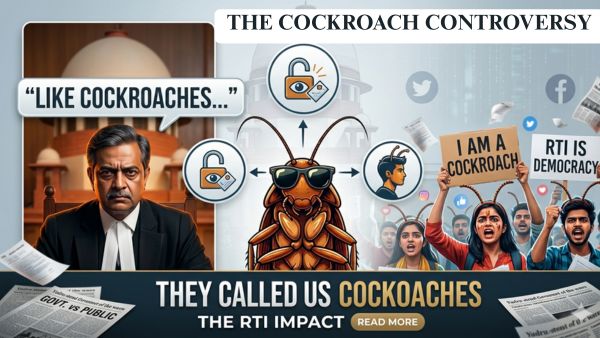
The now viral Cockroach Janta Party that started as an online joke received about 80,000 sign-ups in just three days after its launch. The satirical movement was created by former AAP social media worker Abhijeet Dipke, currently in the United States having recently completed his master’s degree. He made the account after Chief Justice Surya Kant likened unemployed youth in India to cockroaches and invited unemployed youth to own the title.
A satirical online movement called the Cockroach Janta Party went viral across social media platforms after controversial courtroom remarks attributed to Chief Justice of India Surya Kant triggered widespread debate online. What began as a meme-driven reaction soon transformed into a full-fledged parody political movement, drawing attention from political leaders, internet users, and digital creators across the country.
The CJP — which its supporters cheekily note shares its initials with the Chief Justice’s court — quickly developed a full satirical identity. Its profile featured a cockroach wearing sunglasses. Its manifesto described itself as a secular, socialist and democratic platform. Its membership criteria required prospective members to identify with at least one of the following: unemployed, lazy, chronically online, or possessing a professional-level ability to rant.
Politicians Join the CJP — And It Gets Wilder
TMC leader Mahua Moitra jokingly posted that she also wanted to join the Cockroach Janta Party, following which the account humorously welcomed her. Kirti Azad also interacted with the trend and jokingly asked what qualifications were needed to become a member. The account replied that winning the 1983 Cricket World Cup was qualification enough. These interactions helped push the satire further into mainstream political conversations online.
In one of the more surreal scenes, activists participated in a cleanliness drive in Kalindi Kunj wearing makeshift cockroach antennae and carrying placards declaring “I am a cockroach.”
The CJP also announced a Five-Point Agenda for 2029, calling upon leaders of all opposition parties to stand behind their platform to save democracy — making it clear that what had started as a joke was quietly morphing into something with genuine political undertones.
The CJI’s cockroach remarks did not land in a vacuum. India’s youth are already under enormous economic pressure in 2026 — from rising fuel costs to a weakening rupee. Just days before the controversy, PM Modi himself stood before the nation and made a stunning economic appeal. Modi asked every Indian to stop buying gold, avoid foreign trips, and work from home — a direct consequence of India’s forex reserves falling by $38 billion in just two months. When the Chief Justice calls the same struggling youth “cockroaches”, the anger that followed was not just about one word. It was the breaking point of a generation already pushed to its limit.
Why the CJI Surya Kant Cockroach Controversy 2026 Hit So Deep
Abhijeet Dipke, founder of the CJP, said: “I think the biggest takeaway from the response is that young people in India are frustrated since no political party has done anything for them in the last few years. I think that is precisely why all have signed up as cockroaches.”
This is the real story underneath the CJI Surya Kant cockroach controversy 2026. India is a country where over 40% of its graduates remain unemployed or underemployed. Where NEET paper leaks rob deserving students of their futures. Where RTI activists — the very people the Chief Justice dismissed — have exposed some of the most significant acts of corruption and institutional failure in recent memory.
When the highest judicial authority in the land uses the word cockroach for these citizens, it does not just sting. It confirms a fear that millions of young Indians already carry — that the system does not see them. The Cockroach Janta Party, absurd as it is, gave those millions a way to laugh back at that system. And sometimes, laughter is the most powerful form of resistance.
Sources and further reading on the CJI Surya Kant Cockroach Controversy 2026 include reporting and analysis by NDTV, Indian Express, Times of India, Hindustan Times, and Economic Times. These publications covered the original Supreme Court remarks, the subsequent clarification issued by Chief Justice Surya Kant, the public backlash from activists and opposition leaders, and the rapid rise of the viral satirical movement known as the Cockroach Janta Party (CJP). Readers interested in exploring the controversy in greater detail can refer to NDTV’s report on the CJI clarification, Indian Express coverage of the legal and political reactions, Times of India’s reporting on the viral growth of the CJP and its manifesto, Hindustan Times’ coverage of the clarification regarding fake degree holders, and Economic Times’ explainer on how the movement spread across social media and entered mainstream political discourse.
What Happens Next?
Dipke cautioned that it is still too early to predict what shape, if any, the Cockroach Janata Party will ultimately take. “It is too soon to say anything. We are still trying to evaluate the entire situation and decide where to take it over the next month or two,” he said.
Whether the CJP becomes a formal registered party, a pressure group, or simply a powerful cultural moment that fades — one thing is certain. The CJI Surya Kant cockroach controversy 2026 has already left a permanent mark on how India’s youth see their relationship with its most powerful institutions.
FAQ — CJI Surya Kant Cockroach Controversy 2026
Q1. What did CJI Surya Kant say about cockroaches? On May 15, 2026, during a Supreme Court hearing, CJI Surya Kant compared unemployed youth who become RTI activists and social media critics to cockroaches who spread everywhere after failing to find employment in their professions.
Q2. Did CJI Surya Kant apologise for the cockroach remark? The CJI did not formally apologise but issued a clarification on May 16, 2026, stating his remarks were misrepresented and were directed only at people using fake degrees to enter professions — not at India’s youth in general.
Q3. What is the Cockroach Janta Party (CJP)? The Cockroach Janta Party is a satirical online movement created by former AAP social media worker Abhijeet Dipke in response to the CJI’s remarks. It gained over 80,000 members in three days and attracted two TMC MPs including Mahua Moitra.
Q4. Is the Cockroach Janta Party a real political party? No. It is currently a satirical online movement — not a formally registered political party. However, its founder has not ruled out giving it a more formal shape in the future.
Q5. Why did the CJI’s cockroach remark go viral in India? The remark struck a deep nerve among millions of young, unemployed Indians who felt the Chief Justice of India had dismissed their legitimate exercise of democratic rights — including RTI applications and public criticism of institutions — as the behaviour of social parasites.

 By
By