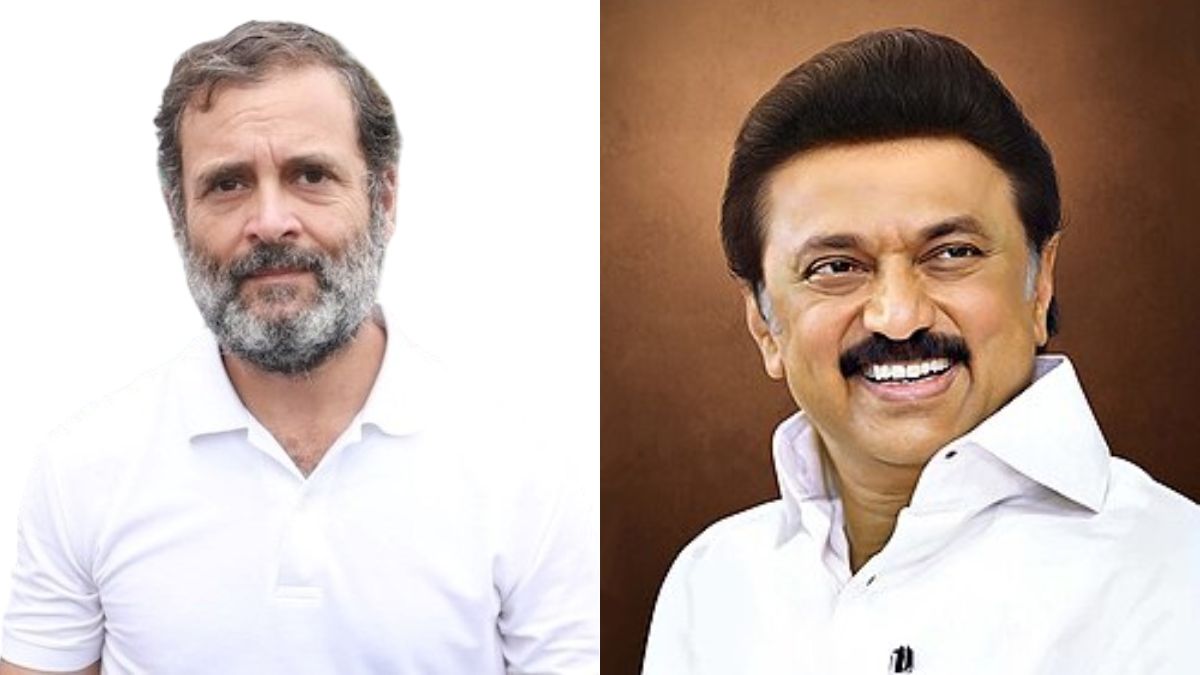
Rahul Gandhi’s vote theft allegations create Congress infighting as DMK’s Stalin supports him. BJP counters claims amid Election Commission scrutiny. Full analysis of India’s election controversy.
Rahul Gandhi’s vote rigging allegations create Congress infighting as DMK’s Stalin supports him. BJP counters claims amid Election Commission scrutiny. Full analysis of India’s election controversy.

The Indian political landscape has been rocked by Rahul Gandhi’s vote theft allegations, exposing significant divisions within the opposition ranks. While DMK chief M.K. Stalin has vehemently supported Gandhi’s claims of electoral manipulation, a senior Congress MLA from Karnataka has openly criticized the approach as “counterproductive.” This controversy emerges just weeks after the general elections, where the BJP secured victory despite opposition expectations of stronger performance.
Gandhi’s allegations center around three key issues: EVM tampering, voter suppression tactics, and Election Commission bias – charges that the BJP has dismissed as “sour grapes.” The Election Commission, already under scrutiny for its handling of recent polls, now faces renewed opposition pressure. Political analysts suggest this controversy could either unite opposition forces or further fragment anti-BJP alliances, depending on how evidence is presented and public perception evolves.
The Anatomy of the Controversy
Gandhi’s Specific Allegations
In multiple press conferences, Rahul Gandhi has outlined what he calls “institutionalized vote theft”:
- Suspicious EVM Movements: Claims of unusual transportation patterns days before voting
- Voter List Irregularities: Alleged deletion of opposition-leaning voters in key constituencies
- Suppression Tactics: Accusations of targeted intimidation in opposition strongholds
Congress Internal Dissent
The criticism from within Congress ranks came unexpectedly from Bengaluru MLA Zameer Ahmed Khan, who told reporters:
“Making vague allegations without concrete proof only damages our credibility. We need to focus on grassroots organization rather than conspiracy theories.”
Political observers note this reflects growing frustration among state-level Congress leaders who believe the national leadership’s approach is hurting their local prospects.
The Vote Theft Allegations and Political Fallout
Rahul Gandhi’s vote theft claims have not only targeted the BJP and the Election Commission but also sparked intense debates within the opposition. Support from allies like DMK contrasts with skepticism from some Congress leaders, making this both a political flashpoint and a test of opposition unity ahead of state elections.
DMK’s Full-Throated Support
Stalin’s Strong Endorsement
Tamil Nadu Chief Minister M.K. Stalin launched a blistering attack at a Chennai rally:
*”The BJP has turned the Election Commission into its puppet. What Rahul Gandhi is exposing is just the tip of the iceberg – we have evidence of systematic rigging in at least 50 constituencies.”*
The DMK has promised to submit a white paper documenting alleged irregularities, though no timeline has been provided.
Historical Context
This isn’t the first time EVM credibility has been questioned:
- 2009: CPI(M) raised concerns after unexpected losses
- 2014: AAP demanded VVPAT verification
- 2019: 22 opposition parties petitioned Supreme Court for audits
However, no conclusive evidence of large-scale tampering has ever been presented in Indian courts.
BJP’s Counteroffensive
Official Response
Union Minister Anurag Thakur dismissed the allegations as “the desperate cries of a defeated dynasty”:
“When they win, EVMs are perfect. When they lose, EVMs are faulty. This hypocrisy shows their disrespect for voters’ mandate.”
Election Commission’s Position
While the EC hasn’t directly addressed Gandhi’s latest claims, it recently:
- Published EVM security protocols
- Highlighted international recognition of India’s electoral system
- Noted that courts have consistently upheld EVM reliability
Expert Analysis
Political Strategists Weigh In
Dr. Sandeep Shastri (Political Analyst):
“The opposition faces a dilemma – pushing this narrative risks appearing as bad losers, but ignoring it could demoralize their base. They need forensic-level evidence to shift public opinion.”
Legal Perspective
Senior Advocate Prashant Bhushan suggests:
*”The law provides for election petitions, not press conferences. If they have proof, they must approach the courts within the 45-day limitation period.”*
Comparative International Context
Examining similar allegations globally:
- United States: Trump’s 2020 claims weakened Republican credibility
- Brazil: Bolsonaro’s fraud allegations led to riots
- Germany: Constitutional Court strictly verifies all election tech
India’s robust judicial review process for elections contrasts with nations where such claims have caused violence.
Potential Fallout
Opposition Unity Prospects
The controversy tests the INDIA alliance’s cohesion:
- Supporters: TMC, DMK back Gandhi
- Skeptics: JD(U), some Congress leaders urge caution
- Neutrals: AAP demands EC reforms but avoids direct accusations
Electoral Reform Demands
Growing calls for:
- 100% VVPAT verification
- Paper ballot backup systems
- EC appointment process reforms
Conclusion
As the debate over Rahul Gandhi’s vote theft allegations reaches a fever pitch, the political ramifications continue to unfold. While DMK’s Stalin has provided opposition solidarity, the Congress’s internal divisions reveal strategic disagreements about confronting the BJP. The Election Commission’s credibility faces its sternest test in years, even as the BJP leverages the controversy to paint opponents as undemocratic.
With state elections looming in Maharashtra and Haryana, how this narrative develops could significantly impact India’s political trajectory. Unless concrete evidence emerges through proper channels, analysts suggest the allegations may remain a political talking point rather than a legal reality. What remains clear is that India’s electoral integrity debate has entered a new, more contentious phase.
 By
By